

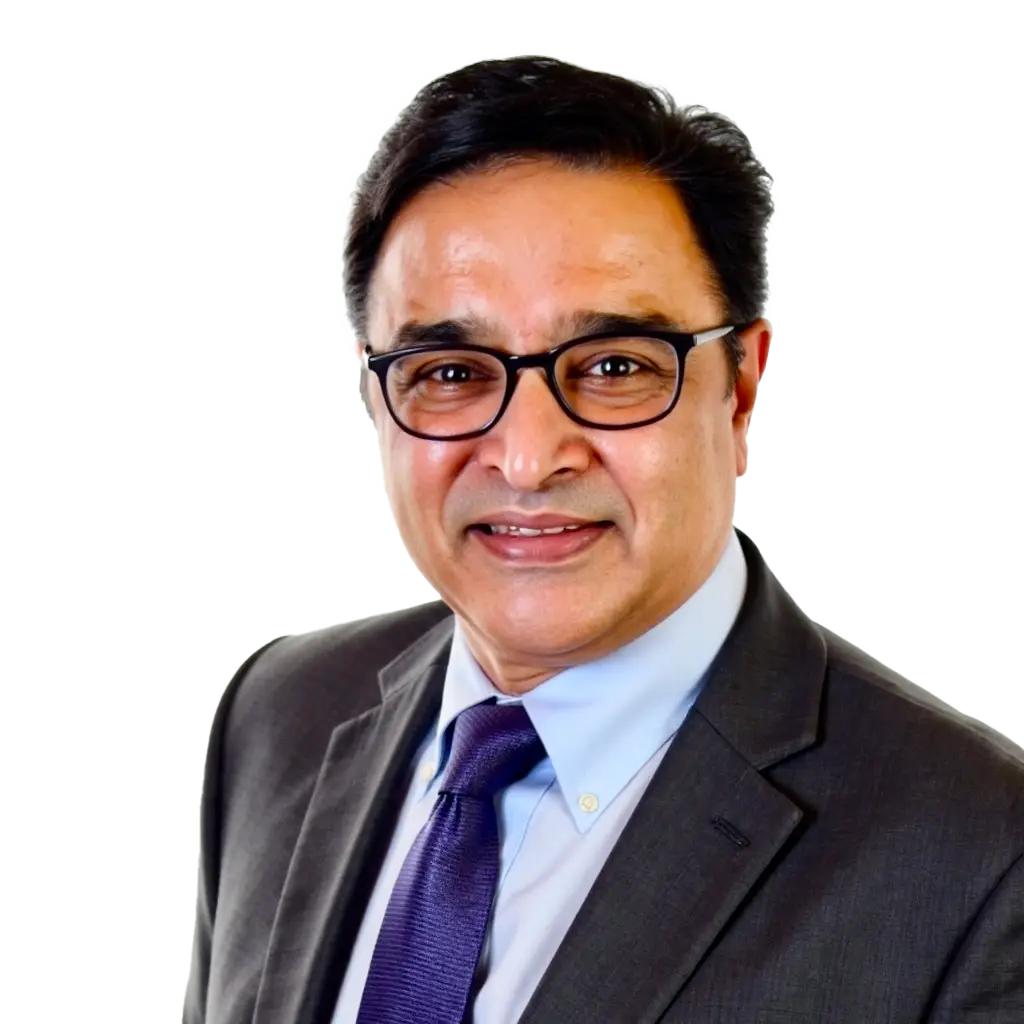
Meet Dr. Dhillon
My path has never been linear, but every turn has carried purpose.
I grew up in India and began my academic journey at St. John’s High School in Chandigarh. After graduation and several corporate roles, I pursued an MBA in Operations Management, expecting a conventional career in business. Then, over an ordinary coffee, an extraordinary conversation shifted everything. I was introduced to the world of computers—not through flashing screens or games, but through the quiet rigor of operations research, mathematical modeling, and the emerging possibilities of natural language processing. In that moment, I saw how algorithms could tackle real-world problems and how language itself could be parsed, understood, and modeled. It was the spark of a lifelong fascination with systems, structure, and the power of computation.
Starting over in the U.S. without a professional network or mentors was far from easy. Yet by leaning on my interdisciplinary foundation and a commitment to scholarship and service, I rebuilt. Opportunities followed: mentoring doctoral students, advising universities around the world, securing competitive grants, and holding leadership roles that shaped both institutions and people.
Every pivot—from Chandigarh to London, from theory to practice, from the lecture hall to leadership—has carried its own lessons. Today, as a professor and researcher, I continue to explore the evolving relationship between people and technology, with a focus on cybersecurity, AI ethics, and digital trust. The thread connecting it all is a simple conviction: technology must serve society, never the other way around.
The road ahead remains unwritten—and I remain as energized as ever for the next turn.
My path has never been linear, but every turn has carried purpose.
I grew up in India and began my academic journey at St. John’s High School in Chandigarh. After graduation and several corporate roles, I pursued an MBA in Operations Management, expecting a conventional career in business. Then, over an ordinary coffee, an extraordinary conversation shifted everything. I was introduced to the world of computers—not through flashing screens or games, but through the quiet rigor of operations research, mathematical modeling, and the emerging possibilities of natural language processing. In that moment, I saw how algorithms could tackle real-world problems and how language itself could be parsed, understood, and modeled. It was the spark of a lifelong fascination with systems, structure, and the power of computation.
That curiosity carried me to the London School of Economics, where I completed my MSc and PhD in Information Systems. At LSE, I discovered that technology was not only functional but also profoundly philosophical. A course titled simply “Information” opened the door to semiotics—the study of signs and meaning. I began to see that systems are not just engineered; they are interpreted, navigated, and lived. That realization reshaped my thinking and set the trajectory of my career.
My professional journey has since spanned continents—England, Hong Kong, Portugal, Sweden, and ultimately the United States. Along the way, I found my calling in cybersecurity and information ethics. I came to understand that secure systems require more than technical safeguards; they demand sensitivity to the ways power, culture, and information converge. I became drawn to questions of how to design environments that protect privacy, foster trust, and align human values with digital infrastructures.
Starting over in the U.S. without a professional network or mentors was far from easy. Yet by leaning on my interdisciplinary foundation and a commitment to scholarship and service, I rebuilt. Opportunities followed: mentoring doctoral students, advising universities around the world, securing competitive grants, and holding leadership roles that shaped both institutions and people.
Every pivot—from Chandigarh to London, from theory to practice, from the lecture hall to leadership—has carried its own lessons. Today, as a professor and researcher, I continue to explore the evolving relationship between people and technology, with a focus on cybersecurity, AI ethics, and digital trust. The thread connecting it all is a simple conviction: technology must serve society, never the other way around.
The road ahead remains unwritten—and I remain as energized as ever for the next turn.
The Journey So Far
-
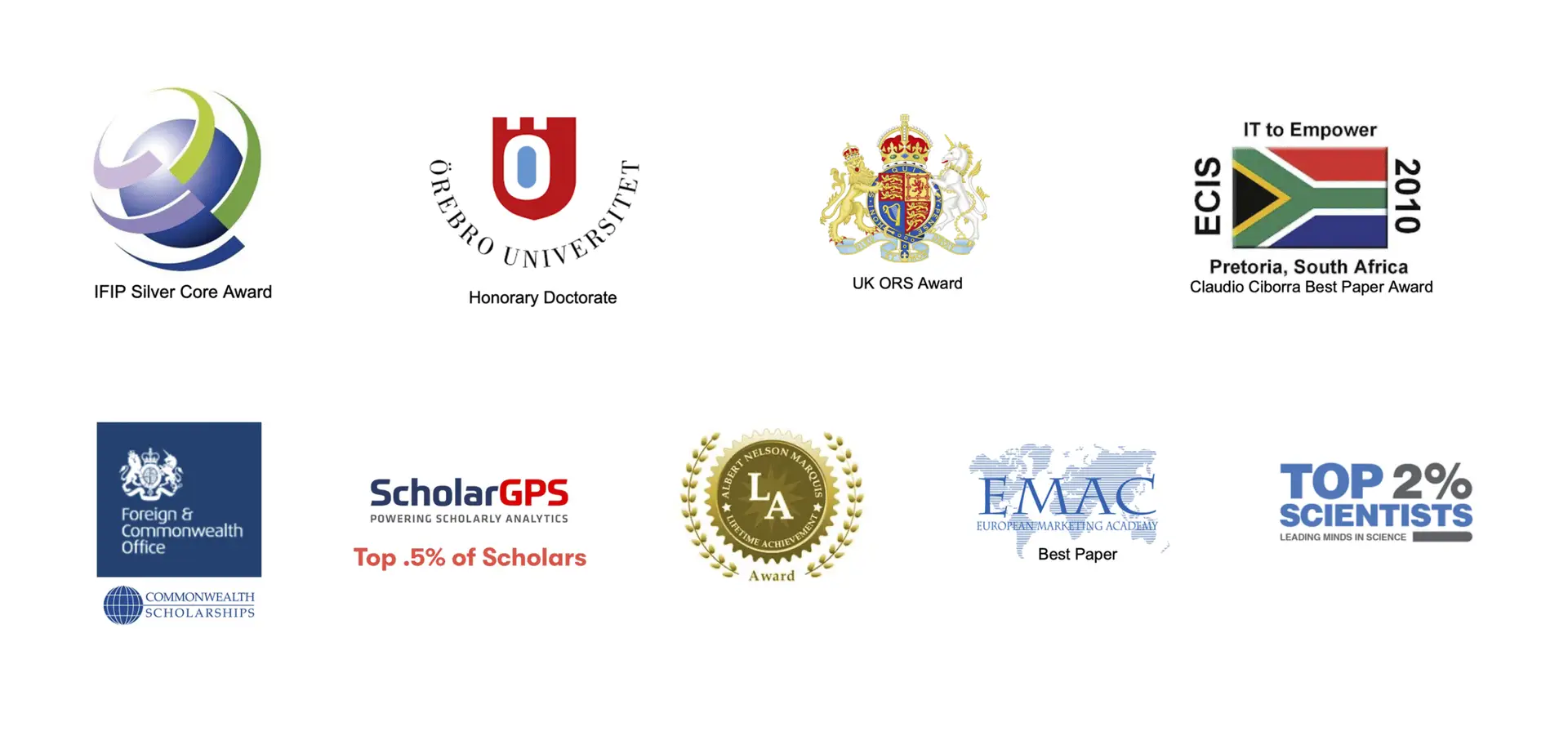
British Commonwealth Scholar
Research Fellow at the Computer Security Research Center, LSE PhD from London School of Economics, UK
-
Faculty appointments
Cranfield School of Management, UK; City University of Hong Kong; UNLV; VCU; UNCG; UNT
-
Honorary appointments
ISEG, University of Lisbon, Portugal; University of KwaZulu-Natal, South Africa
-
Honorary Doctorate
Örebro University, Sweden
-
Global recognition
Listed as top scholar - Scholar GPS, Stanford listing, ABDC ranking, among others
Awards & Accolades
"Truth is the only wealth that endures forever."
"It's not my important where you come from. It's hell more important where you are going."
"When people walk on the dirty side of the road their shoes always remain muddy."
"There are months where nothing happens; and there are minutes where months happen and change the decades."
"Success is for you to define. Your team is yours to define. The best thing you do may not be on your resume."
"Success is not final, failure is not fatal: it’s the courage to continue that counts."
"Simplicity is about subtracting the obvious and adding the meaningful."
"People may hear your words, but they feel your attitude."
"Trust your hunches. They’re usually based on facts filed away just below the conscious level."
"I believe. I wish. That’s all you need to be an outstanding scholar."
"We cannot solve problems with the same thinking we used when we created them."
Collaborative Footprint


"It always seems impossible until it’s done."